A new military rank system had been introduced for the PLA, but all soldiers must always obey the Communist party, reveals Jayadeva Ranade, the distinguished China expert and retired RA&W officer.

China has been taking "incremental and tactical actions" to press its claims at the Line of Actual Control (LAC) with India and has unsuccessfully sought to prevent New Delhi from deepening its relationship with the US during and subsequent to the standoff, the Pentagon has said in a major report on China's military modernisation.

Chinese military has identified a host of problems after conducting massive military exercises for the first time to sharpen the troops' fighting capability which if not rectified will hinder its ability to win wars.
'Under General Secretary of the Chinese Communist Party (CCP) Xi Jinping, Beijing has stepped up its aggressive foreign policy toward New Delhi. Since 2013, China has engaged in five major altercations with India along the Line of Actual Control (LAC),' said a brief issued by US-China Economic and Security Review Commission.
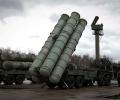
RInstead of disengagement, the Indian and Chinese armies have deployed an estimated 35,000 to 40,000 soldiers each along the LAC. The PLA has deployed S-400 air defence missiles to neutralise the IAF's advantage in air power

Singh, accompanied by Army Chief Gen Manoj Pande, also carried out a comprehensive review of India's military preparedness along the Line of Actual Control (LAC) in Arunachal Pradesh and lauded the troops for guarding the border with "unwavering commitment and unparalleled courage."

'However, a lot of preparatory work would have to go in and China must be prepared to announce an end to the standoff by disengaging from the remaining areas along the LAC.'

With China reacting sharply to government's plans to construct a border road in Arunachal Pradesh, Home Minister Rajnath Singh on Thursday sent a strong message, asserting that no one can warn India.

With the two armies again in a face-off at multiple points, there is apprehension of renewed clashes.
Within the army, there is growing concern that New Delhi will allow the Chinese to retain the territory they have occupied in the last month.

The Tibetan nation still lives under the yoke of the Chinese Communist Party, and Beijing today has a guilty conscience; this creates a great uneasiness for Xi Jinping and his colleagues observes Claude Arpi.

A new book reproduces original Chinese maps that contradict Chinese propaganda. The book reveals Chinese intelligence admissions that Beijing never maintained any army base, customs office or other government function in the disputed area until 1983.

India said it is strongly committed to ensuring its sovereignty and territorial integrity.

'Could the Chinese have taken a leaf out of our book?' 'That their unprecedented build-up is their attempt at coercive diplomacy with India?' 'And if so, what is it that they could be expecting as a quid pro quo?' asks Shekhar Gupta.

The operation in Nagaland and Manipur was carried out after the army received "credible and specific" intelligence.

After a gap of over two-and-half months, India and China on Sunday held the ninth round of military talks specifically focusing on ways to move forward on the long-negotiated disengagement process in eastern Ladakh as thousands of their troops remained deployed at friction points under freezing conditions.

In the wake of reported incursion attempts by China, India on Wednesday said such incidents take place due to difference of perception about boundary and leaders of both the countries are in talks to resolve the issue.

The Chinese have been objecting to the presence of Indian Navy ships in the region where it has significantly expanded its presence since 2009 through artificial islands and military presence.
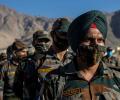
The decisions were mentioned in a joint statement issued by the two armies late Tuesday, a day after the sixth round of Sino-India Corps commander-level talks that lasted for 14-hours.

China remains in firm control of an estimated 600-800 square kilometres of Indian territory.
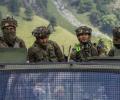
India and China on Saturday held another round of military talks with a focus on taking forward the disengagement process in Hot Springs, Gogra and Depsang in eastern Ladakh and bring down the tensions in the region, official sources said.

Coming ahead of the transition of power from Donald Trump's administration to President-elect Joe Biden's administration after the November 3 US presidential election, the detailed policy document highlights that China is undermining the security, autonomy and economic interests of many nations in the region.
"On the border issue, China always maintains that we should follow through on treaties and agreements we signed and we jointly uphold peace and tranquility at the border region," Foreign Ministry spokesman Wang Wenbin said while responding to Jaishankar's remarks.

Sources said that even though India and China have been talking at the diplomatic and the military level for over six weeks now, there has been no thinning down in troop numbers or equipment by the Chinese side on this front.
The statement of Commander of US Indo-Pacific Command Admiral John Aquilino on Wednesday came ahead of the 15th round of high-level military talks between India and China on March 11.
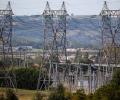
In all likelihood, the next conventional Chinese attack on India would be preceded by a massive cyber attack designed to cripple Indian networks and interfere with our disaster-relief programmes.

The attack was claimed by the outlawed Baloch Liberation Army (BLA) which said it would not tolerate 'any Chinese military expansionist endeavours on Baloch soil'.

Sources indicated that during Saturday's talks, India will insist on a faster disengagement process in remaining areas to bring down tension in the region, which has witnessed a tense standoff between the two militaries for over nine months.
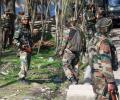
50 terrorists had been killed this year while 12 security forces personnel lost their lives.
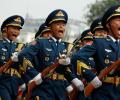
Since the June 15 clash, the PLA has inducted large numbers of troops, armoured vehicles and artillery along the LAC, from Depsang and Galwan in northern Ladakh to Hot Springs, Pangong Tso, and Chushul in central Ladakh, to Demchok and Chumar in southern Ladakh.
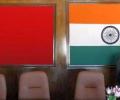
As the border standoff entered the sixth month, an early resolution to the row appeared dim with close to 100,000 Indian and Chinese troops remaining deployed in the high-altitude region and showing readiness for a long-haul. There is no official word on the talks yet but sources said the agenda was to finalise a roadmap for disengagement of troops from all the friction points.
The intrusions into India were likely carried out by the PLA's better trained and equipped 'mobile operational units'.

As per the agreement reached by the two sides, India and China will withdraw the forward deployment in a phased and coordinated manner, the defence minister said.

The Global Times, in an editorial, titled 'Sitharaman greeting sends warm signal', said that the Indian defence minister's traditional 'namaste' greetings to the Chinese soldiers conveyed her hope for peace along the border and "unwillingness to see a new stand-off," adding that this was an attitude of Prime Minister Narendra Modi's government at the Centre.

China's newly-formed Rocket Force has held an exercise with advanced DF-16 medium-range ballistic missile with a range of over 1,000 kms that could threaten a number countries, including India, Japan and the United States.

'The Ladakh Scouts are a fantastic mountain troops suited to this terrain.' 'Other troops have to first get acclimatised, but these men are tough mountain people.'
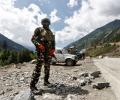
At a virtual media briefing, Ministry of External Affairs (MEA) Spokesperson Anurag Srivastava said disengagement of troops is a complex process which would require mutually agreed 'reciprocal actions'.

In his message to the Buddhist community from his home in McLeodganj, the Tibetan spiritual leader asked people to recite the 'om mani padme hum' mantra. With this practice, you will create some roots of virtue that you can dedicate to me -- Avalakiteshvara's messenger -- to live for 110 or 108 years or so, the Dalai Lama said.

Situated at a height of 15,200 feet above sea level, the pass sits on the top of a craggily formed Himalayan range that separates the Tibetan plateau from the Indian sub-continent.

Chinese President Xi Jinping, who made a rare visit this week to the restive Xinjiang region which borders Ladakh, met the troops and officers stationed there and praised their "outstanding contributions" to the border defence and stabilisation of the volatile province.
 © 2026 Rediff.com - Advertise with us - Disclaimer - Privacy Policy - Sitemap - Feedback - About us - Terms of use - Grievances